
Composite Bonding
What is composite bonding?
Composite bonding is a minimally invasive cosmetic dental treatment in which tooth-coloured resin is applied to the teeth to repair chips, close gaps, reshape teeth or improve discolouration.
The process of composite bonding aims to preserve the natural tooth structure, whilst improving aesthetics and function.
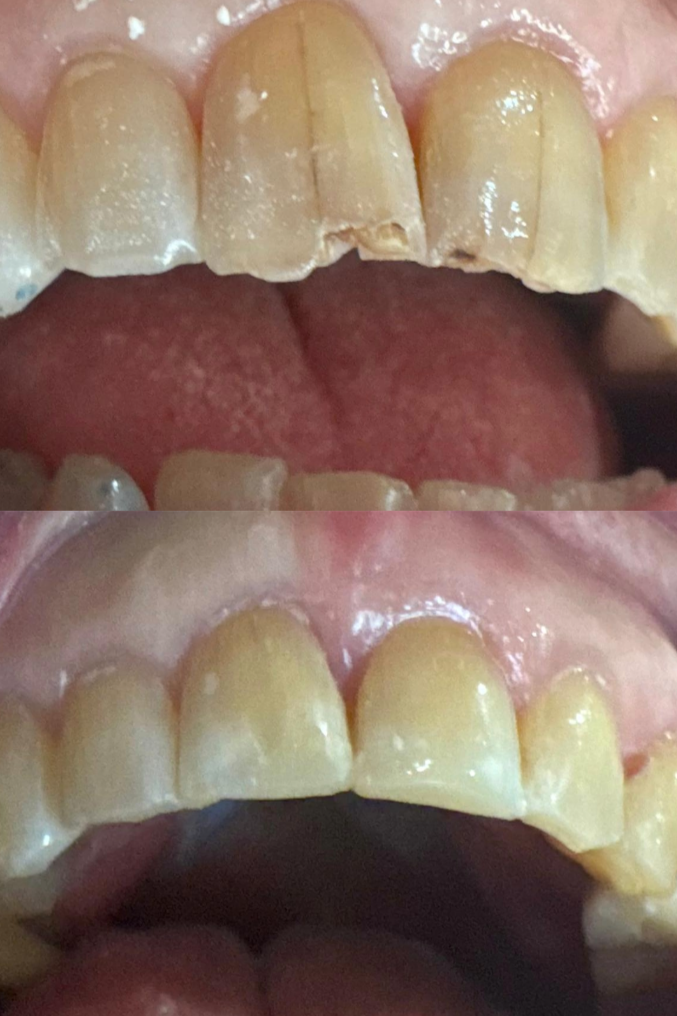
Lengthening and repairing short or worn teeth by applying tooth-coloured composite resin to the edges.
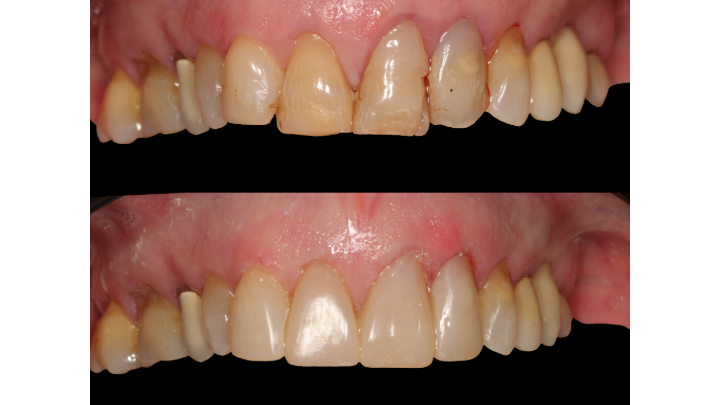
Covers the full surface of the tooth to improve aesthetics, closing small gaps and covering imperfections. Can be used to help change the shape and colour of the whole tooth.
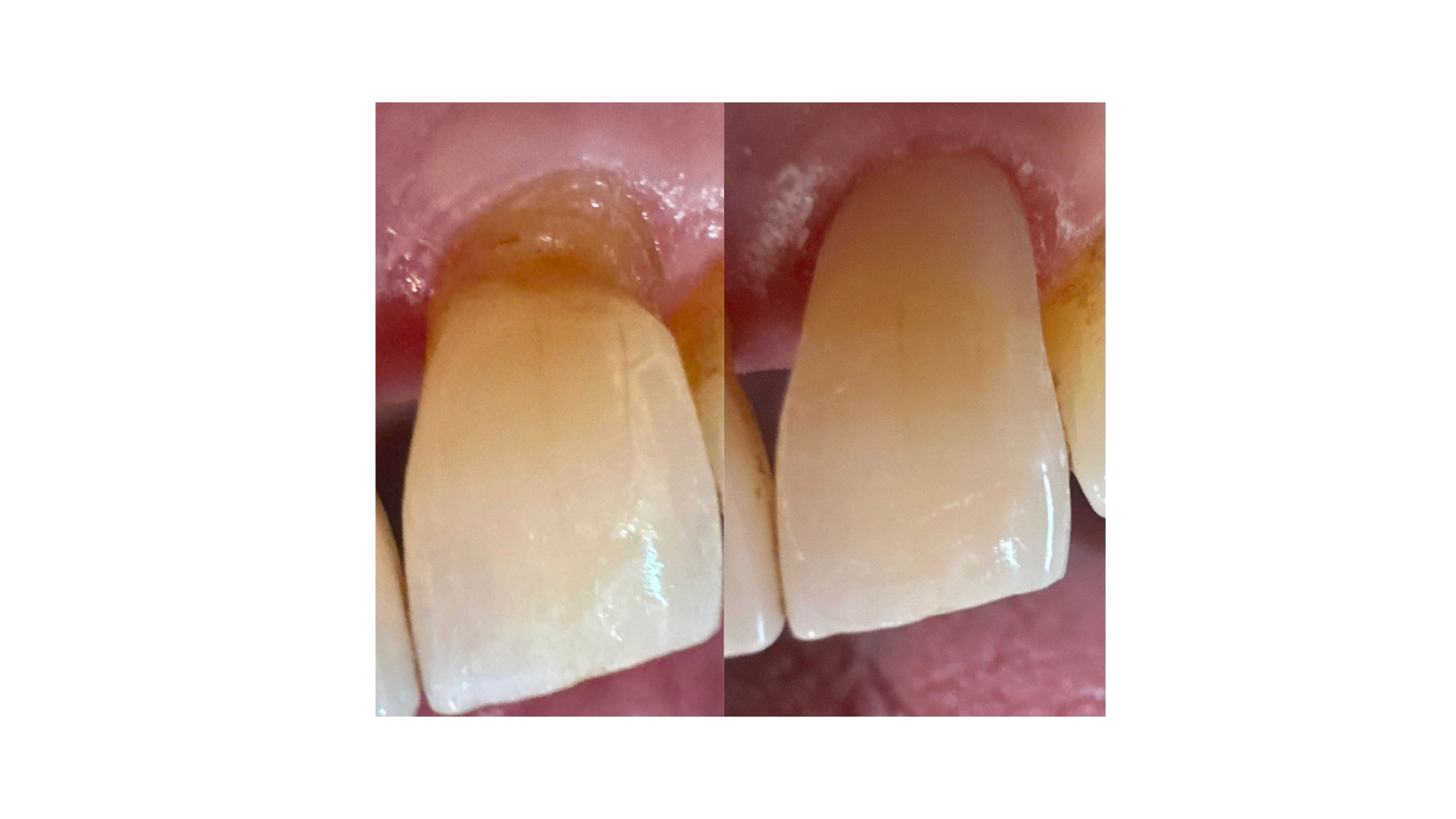
Composite applied to the cheek‑facing (buccal) surfaces of teeth. Usually in cases of tooth wear to improve aesthetics and reduce sensitivity.

Composite Veneer Bonding
Composite veneer bonding involves placing a layer of composite over the whole surface of the tooth to change the shape and colour of the tooth. They can be used to make the teeth more uniform, repair worn teeth and improve the overall colour of teeth.
The full process of composite veneer bonding is shown in the carousel below.
If you are interested in composite bonding, or would like to find out more, please call or email our reception team and they will be happy to assist you.
Composite veneer bonding process
-
![Image showing teeth before composite bonding]()
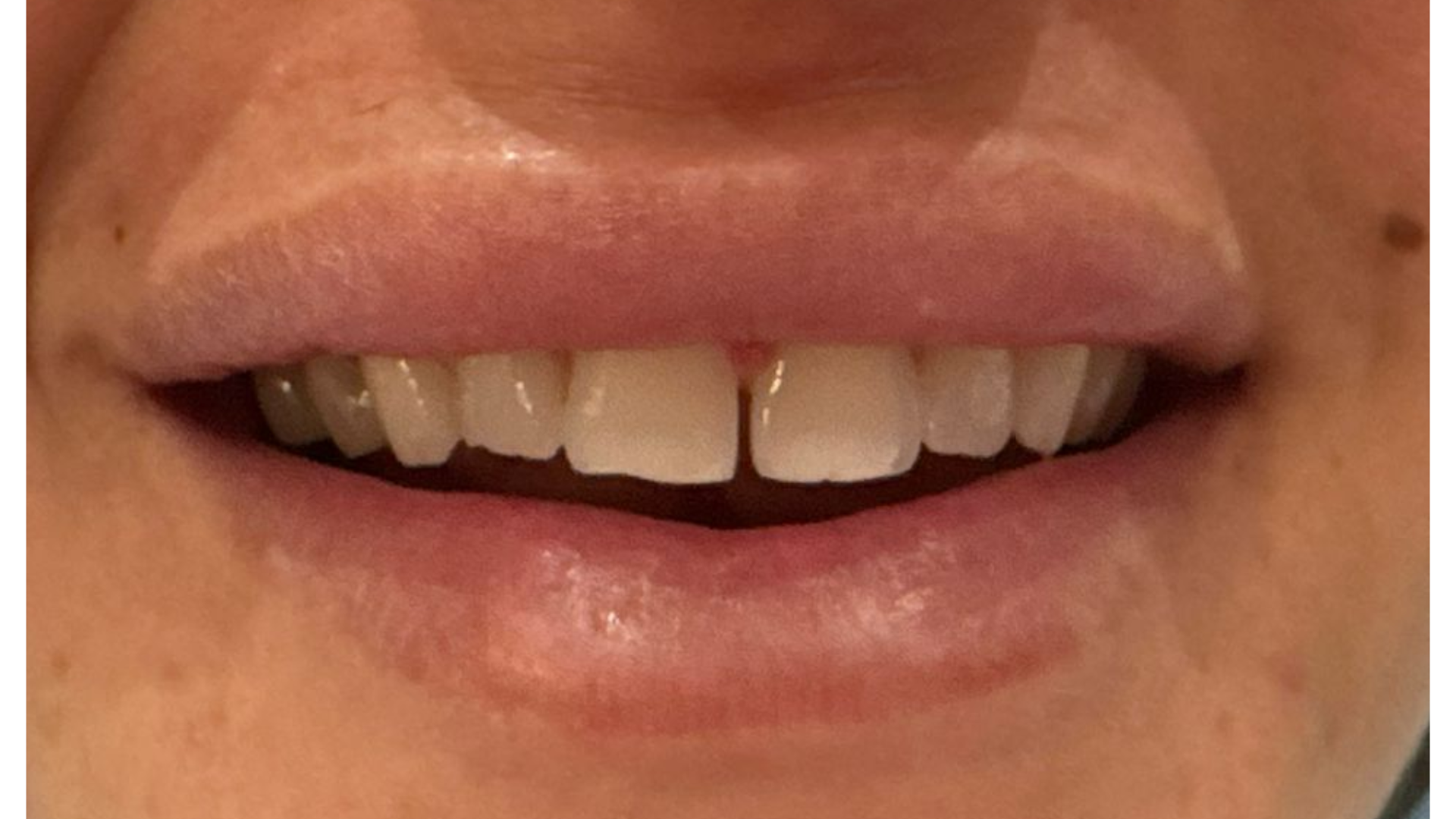
Before Composite bonding
These are the patient’s natural teeth at the initial consultation appointment. They had worn edges, chips, a gap in the middle and a slightly mottled appearance.
The patient wanted to close the gap between the front teeth, even out the shape and size of the teeth, as well as improving the overall colour.
-
![Image showing patient having a 3D scan]()
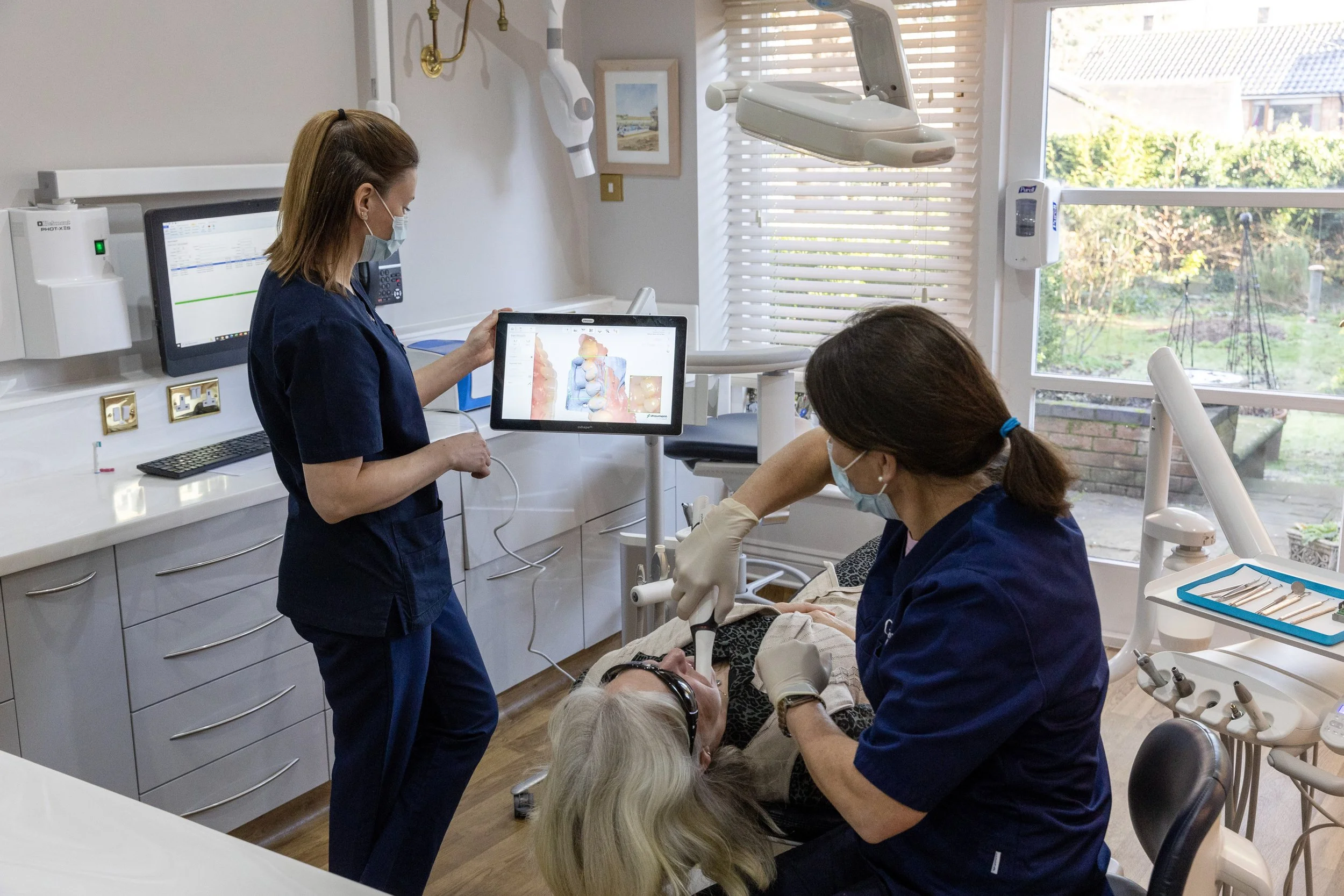
3D scanning and design
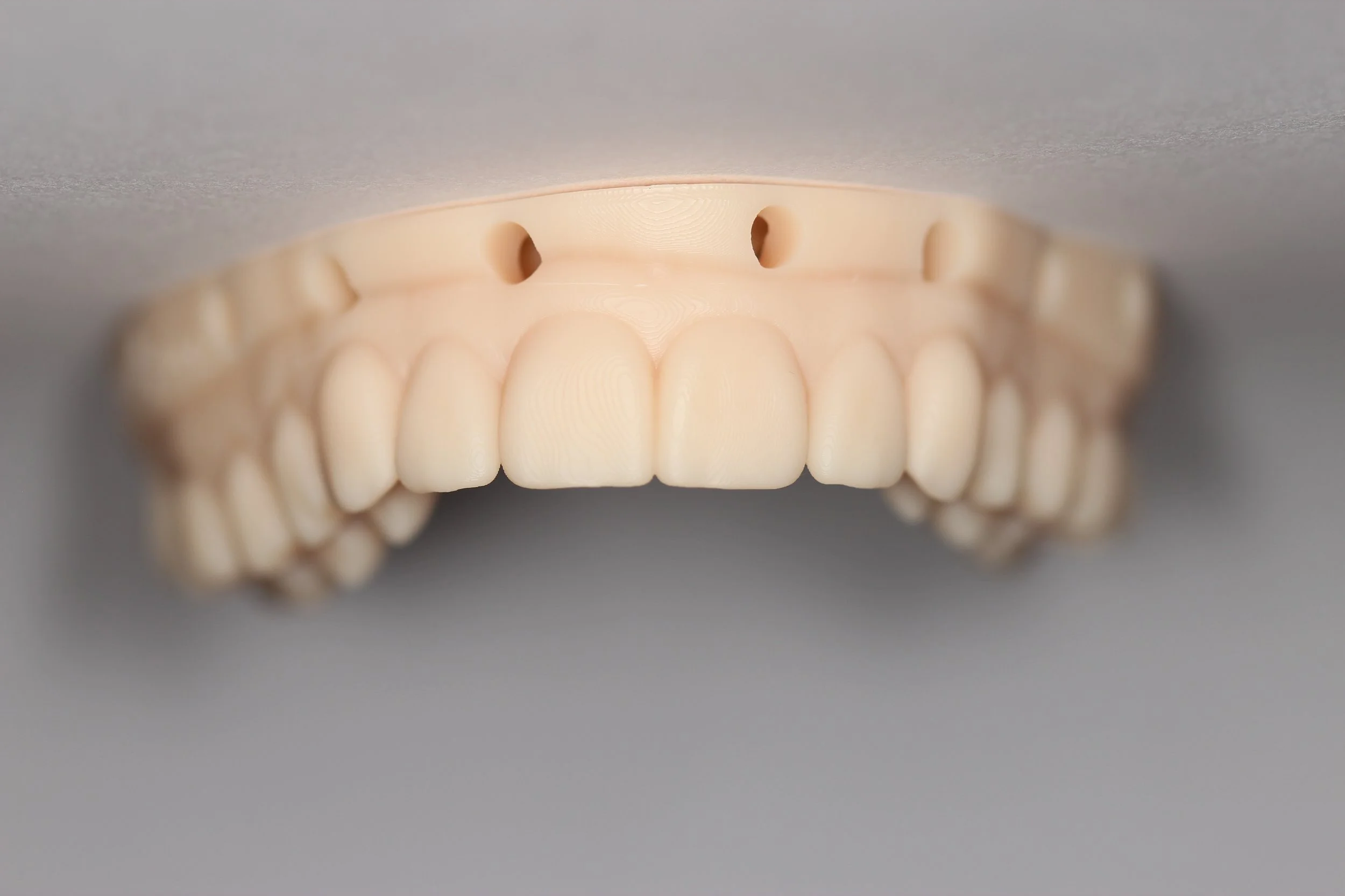
After consultation where we find out your goals for your new smile, we take a 3D scan of your natural teeth. This scan is sent to our lab technician who makes bespoke mock-up of your new teeth.
Before finalising a design we work with you and the lab to ensure the teeth meet your goals, making any fine detail changes we may need at this stage.
The design is then printed into a 3D model which we use to make a custom stent for the composite veneers.
-
![Image showing custom-made stent for composite bonding]()
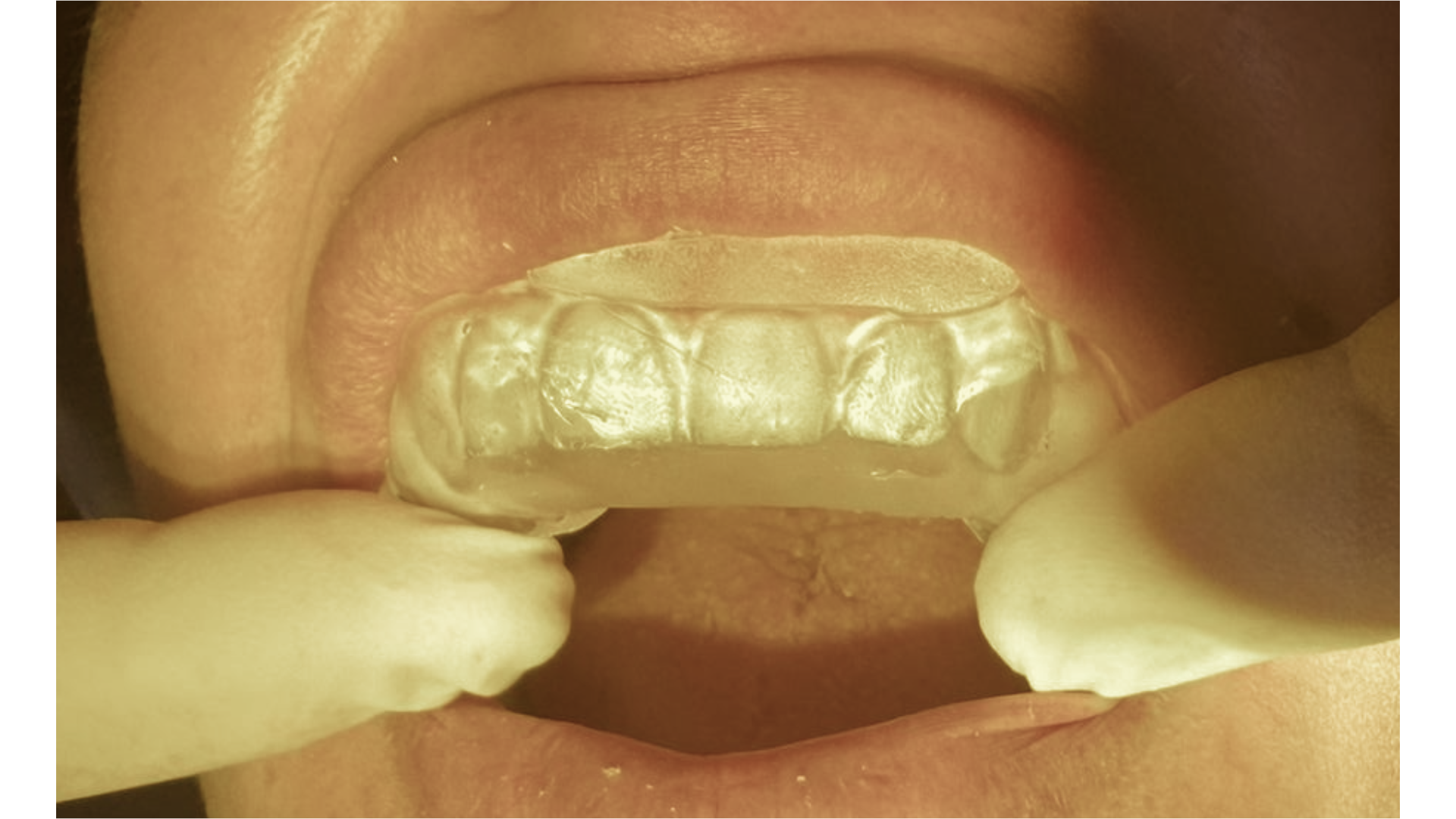
Using a Custom-made stent
With the custom stent in place, the dentist uses an injectable composite resin to create the composite veneer over the surface of the teeth.
Composite veneers are very minimally invasive, covering over the surface of the tooth rather than cutting away tooth surface to make space. Generally, there is no, or very little, tooth preparation required. Some cases, such as very rotated teeth, may need a small amount of preparation first.
-
![Image showing mid-way through composite bonding]()
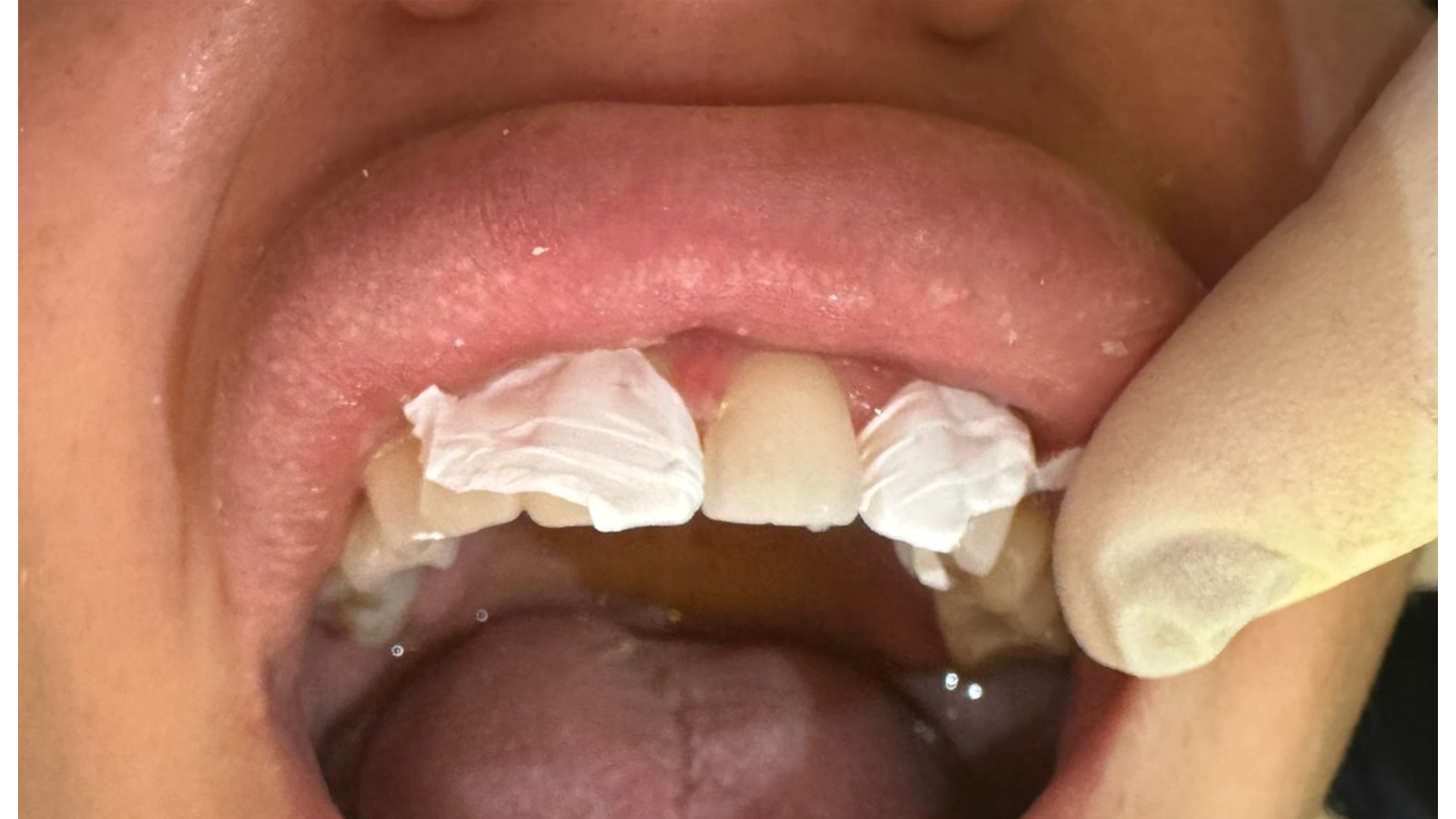
Composite Bonding in Progress
This image shows mid-way through the composite-bonding process with the stent removed. The teeth are individually isolated and bonded to ensure the perfect shape.
-
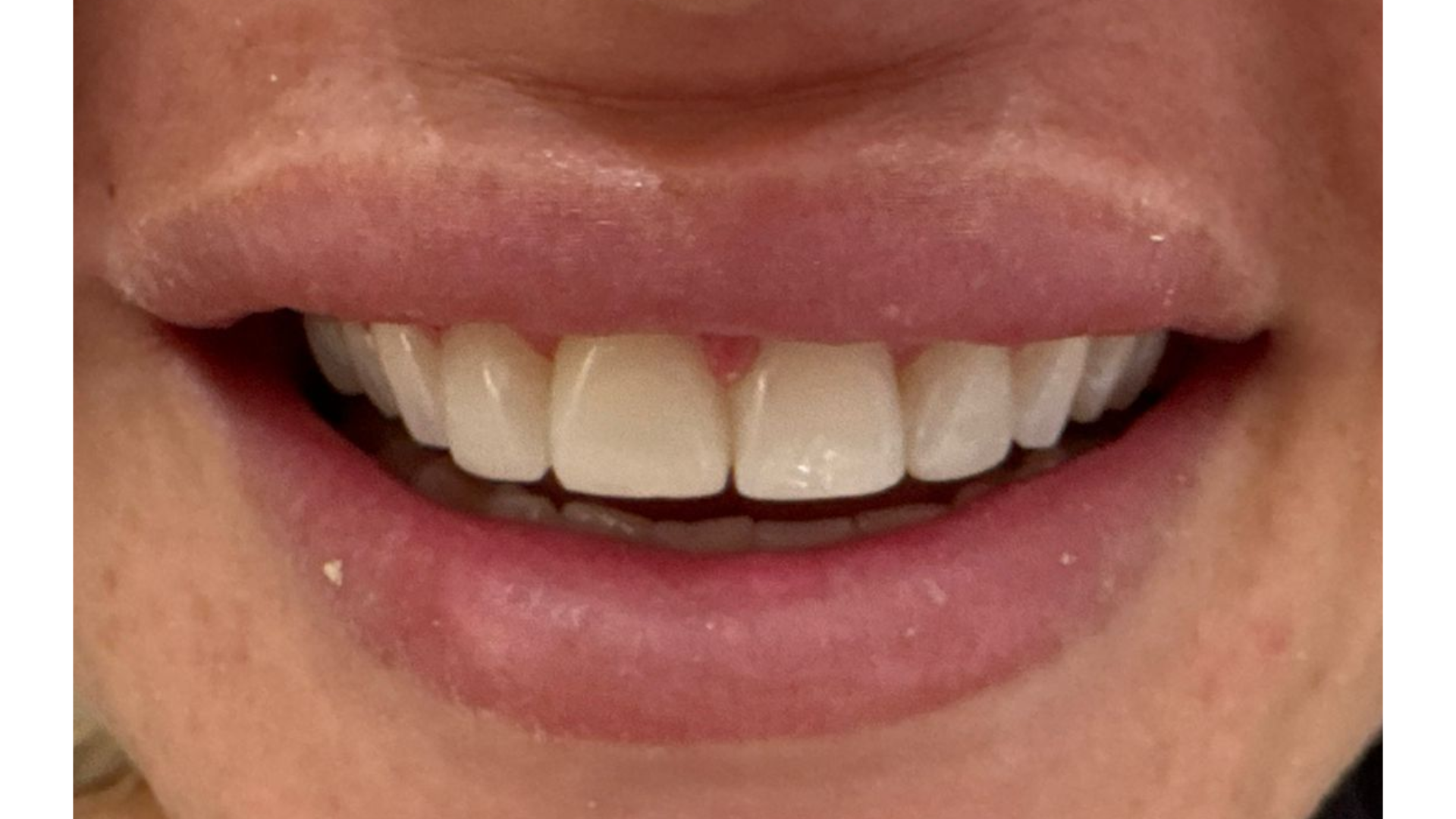
![Image showing after composite bonding from the front]()
After composite bonding
After all of the teeth are bonded, they are polished up to a beautiful shine.
The gap between the front teeth is now closed, the shape of the teeth is much more even and the colour is brighter and more uniform.
-
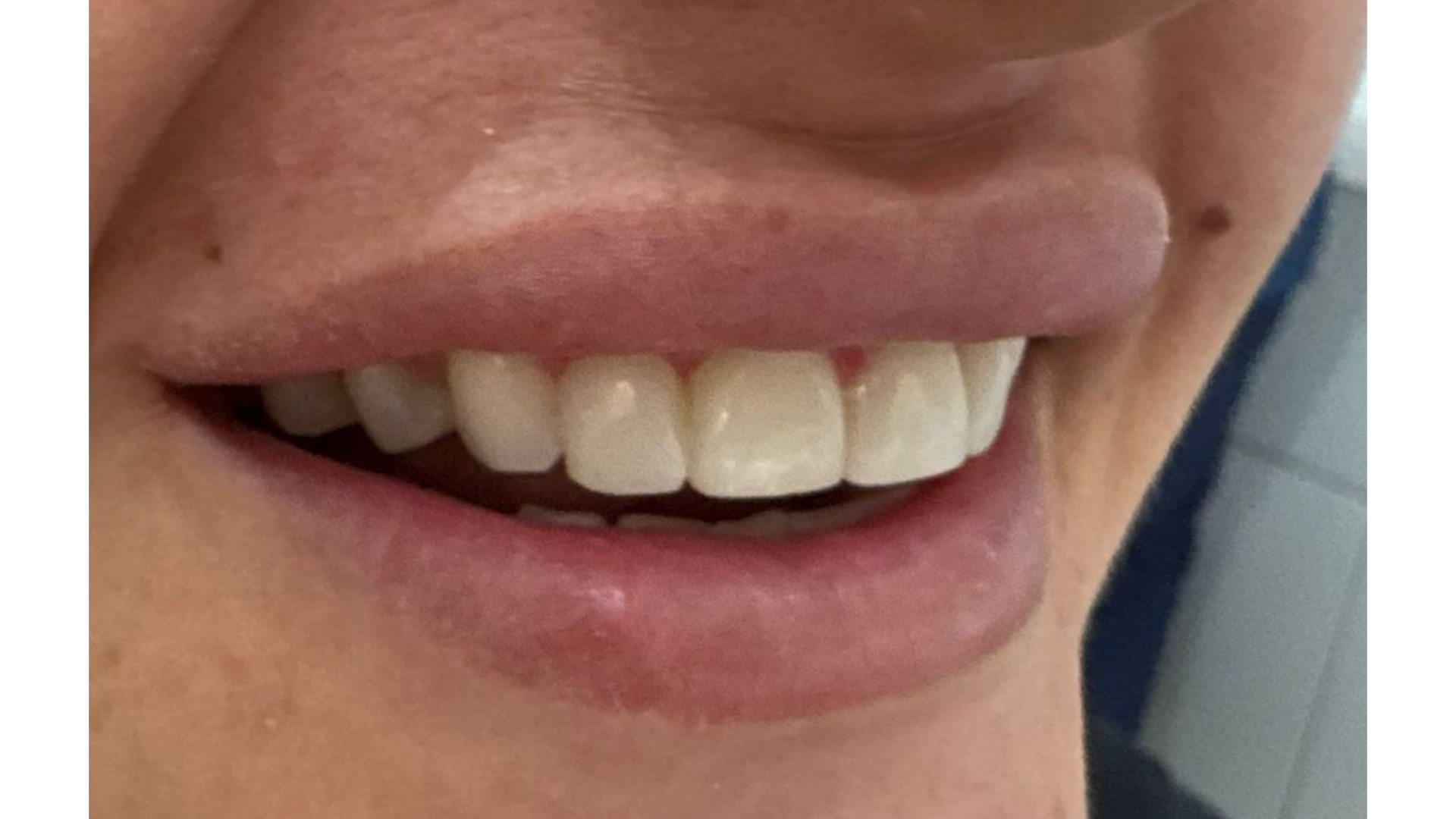
![Image showing composite bonding results right side]()
After composite bonding
After your composite bonding, your dentist will show you how to look after and clean your teeth to ensure you are able to maintain them well.
We recommend using an Oral-B electric toothbrush twice daily for at least 2 minutes, with a fluoride toothpaste. Interdental cleaning should be done at least once daily with floss or interdental brushes, your dentist will advise which is best for you.
-
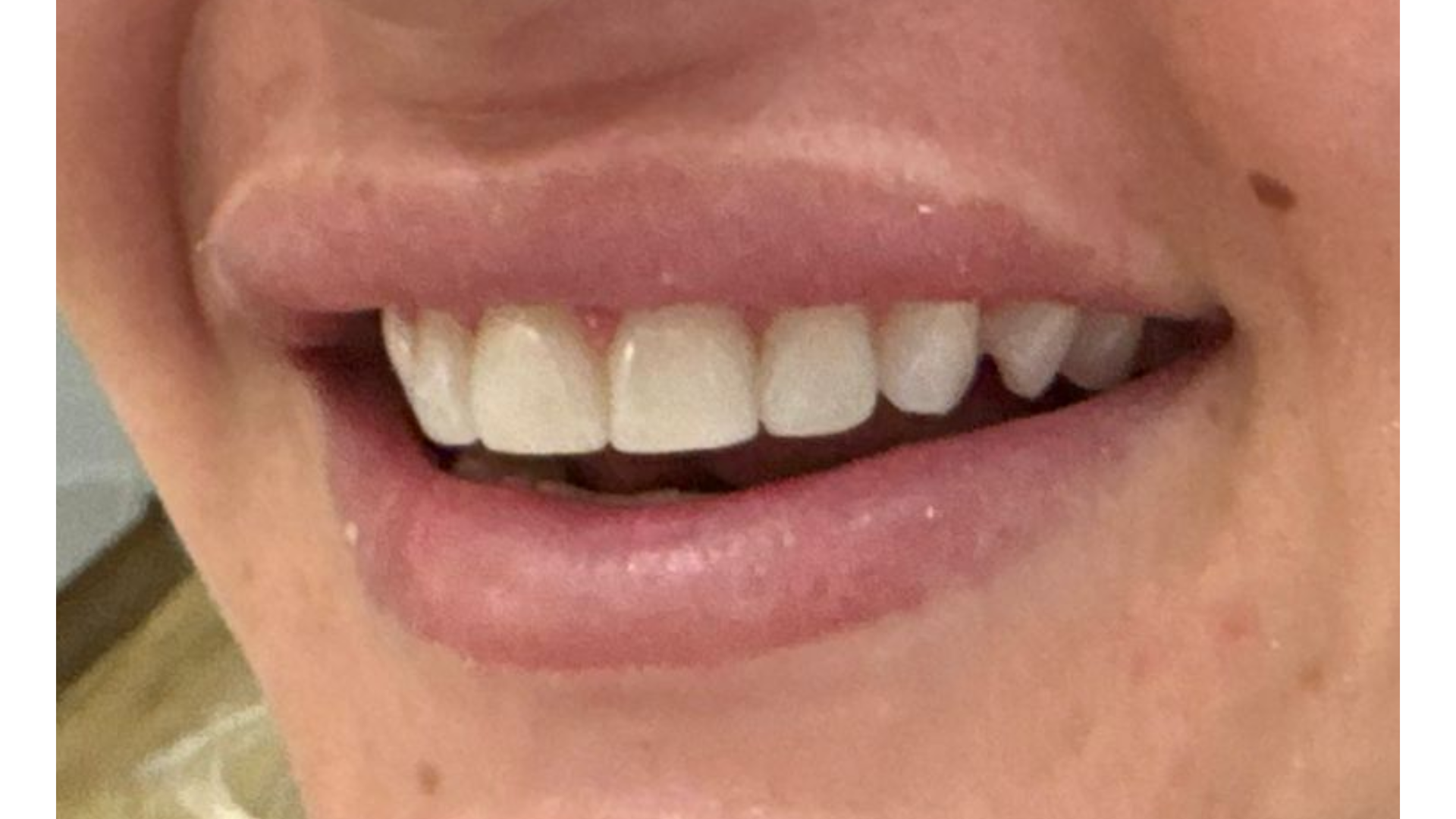
![Image showing composite bonding results Left side]()
After composite bonding
Longevity of composite bonding will depend on good aftercare and maintenance.
1. Good oral hygiene and seeing the hygienist regularly.
2. Regular check-ups with your dentist to monitor all the teeth, including your composite veneers to ensure they are maintained well. Composite veneers, just like teeth, can wear and stain over time, so it is important to have them checked regularly.
3. For some patients, the dentist may recommend a night guard to reduce risk of damage to the composite veneers. Especially those with a history of clenching/grinding or tooth wear.
Composite Edge Bonding
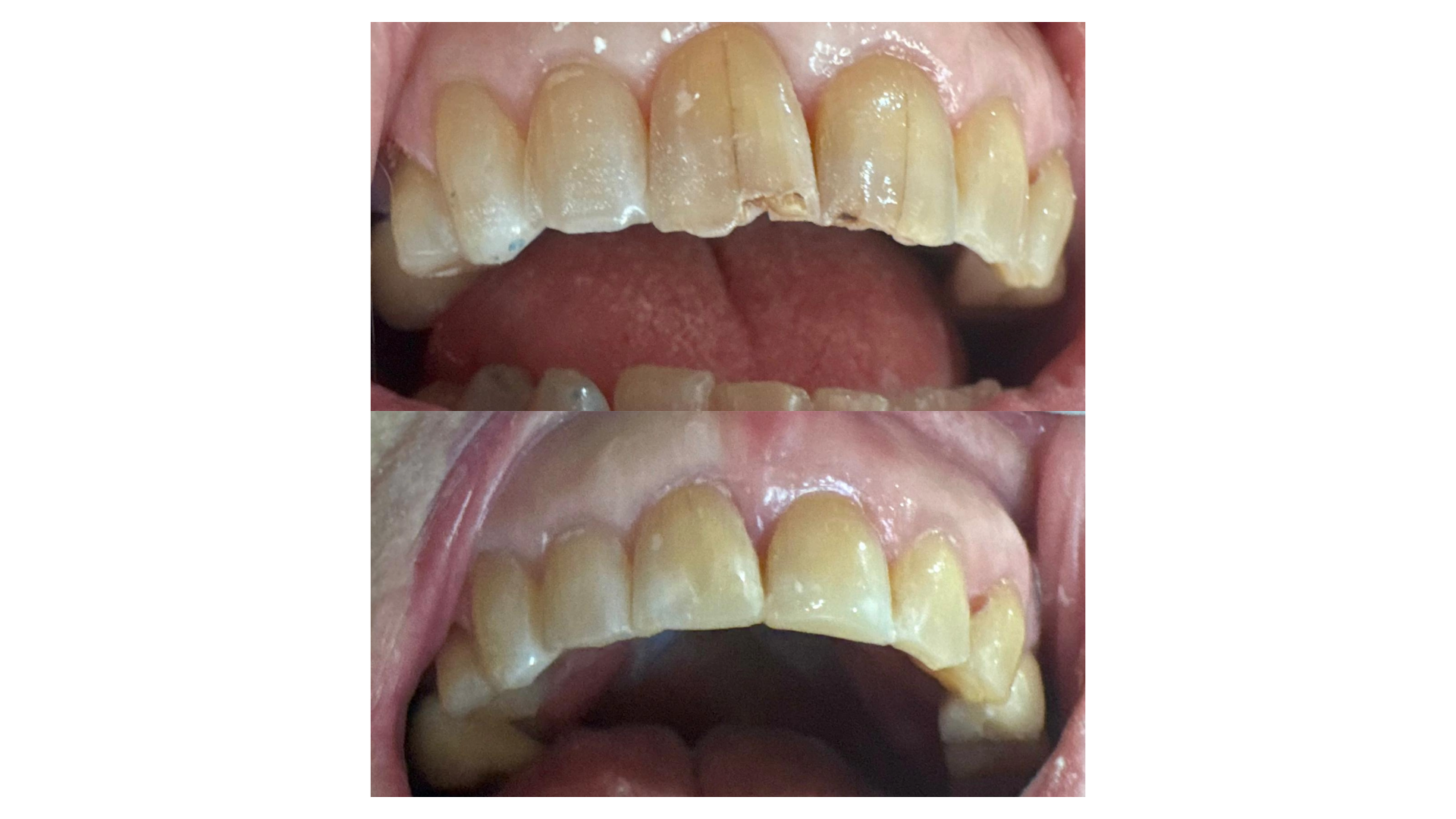
Over time, the tips of the teeth can wear. For some patients, this can happen at a much faster rate, due to habits such as tooth clenching or grinding. Composite bonding can be used to restore the worn tips of the teeth, improving aesthetics of the teeth and preventing further tooth wear by covering the surface.
Edge bonding is largely done freehand by the dentist, using their skill to re-create the shape of the tooth. In cases of more severe wear, more planning may be required, such as assessment of the bite (occlusion) and formulation of a treatment sequence if multiple teeth require restoration.
After edge bonding, your dentist will likely recommend a bite guard to help reduce the risk of further tooth wear and improve longevity of the composite bonding.
Composite Edge Bonding Process
Clinical Assessment
The number of teeth to be bonded, size of restorations and colour is assessed by the dentist
Tooth Preparation
Worn teeth can be soft and in some cases have areas of decay, this needs to be removed to allow a strong bond to the tooth surface.
Composite Bonding
The dentist skilfully shapes the composite directly to the tooth, ensuring to match the colour of the teeth for a seamless finish.
The teeth are polished up to a high shine finish to ensure smooth edges and a natural blend with the tooth.
Polishing
Aftercare
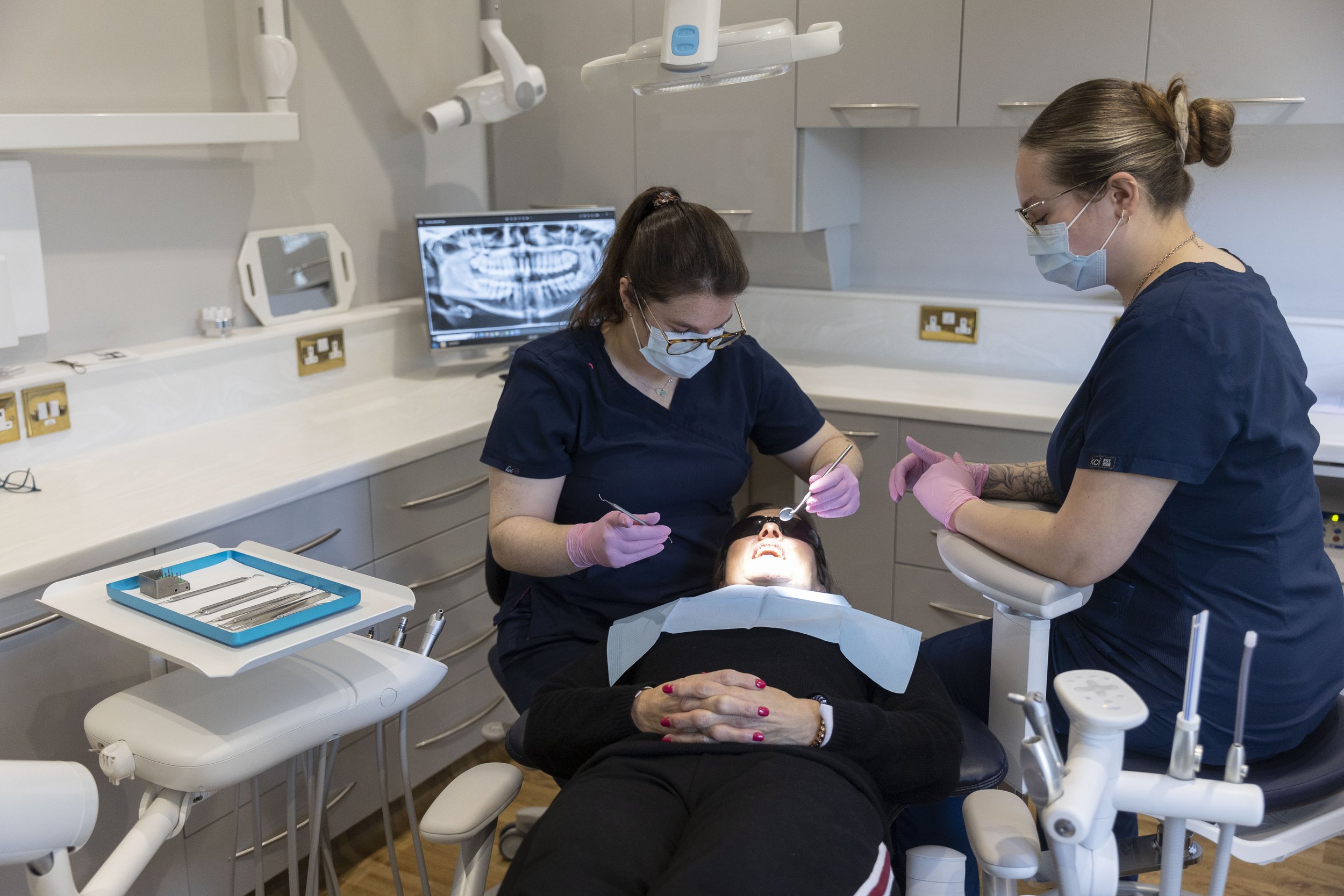
The dentist will go over how to look after your composite bonding at home - toothbrushing and interdental cleaning. Some patients may also be provided with a bite guard to reduce risk of ongoing wear.

Composite buccal Bonding
Similar to composite edge bonding, buccal bonding is used to restore worn teeth
Trauma can be caused to the outer surfaces of teeth by aggressive toothbrushing (abrasion). Over time this can wear large divots in the outer surface of the tooth
Patients with clenching/grinding habits can fracture off the outer surface of the tooth due to the force exerted on the tooth (abfraction)
These areas are not protected by enamel, the outer layer of tooth, and can therefore be very sensitive
They can become so large that they become aesthetically unappealing or even pose risk to the nerve in the centre of the tooth
Composite bonding can be used to restore buccal surfaces, reducing sensitivity by covering exposed dentine, and improving appearance.
The process of buccal composite bonding is very similar to that of composite edge bonding (above).
For more information, or to book a consultation for composite bonding, please contact our reception team on 01256 321945.
Alternatively, by email to office@gwynnedental.co.uk or using the enquiry form, and one of the team will get back to you as soon as possible.